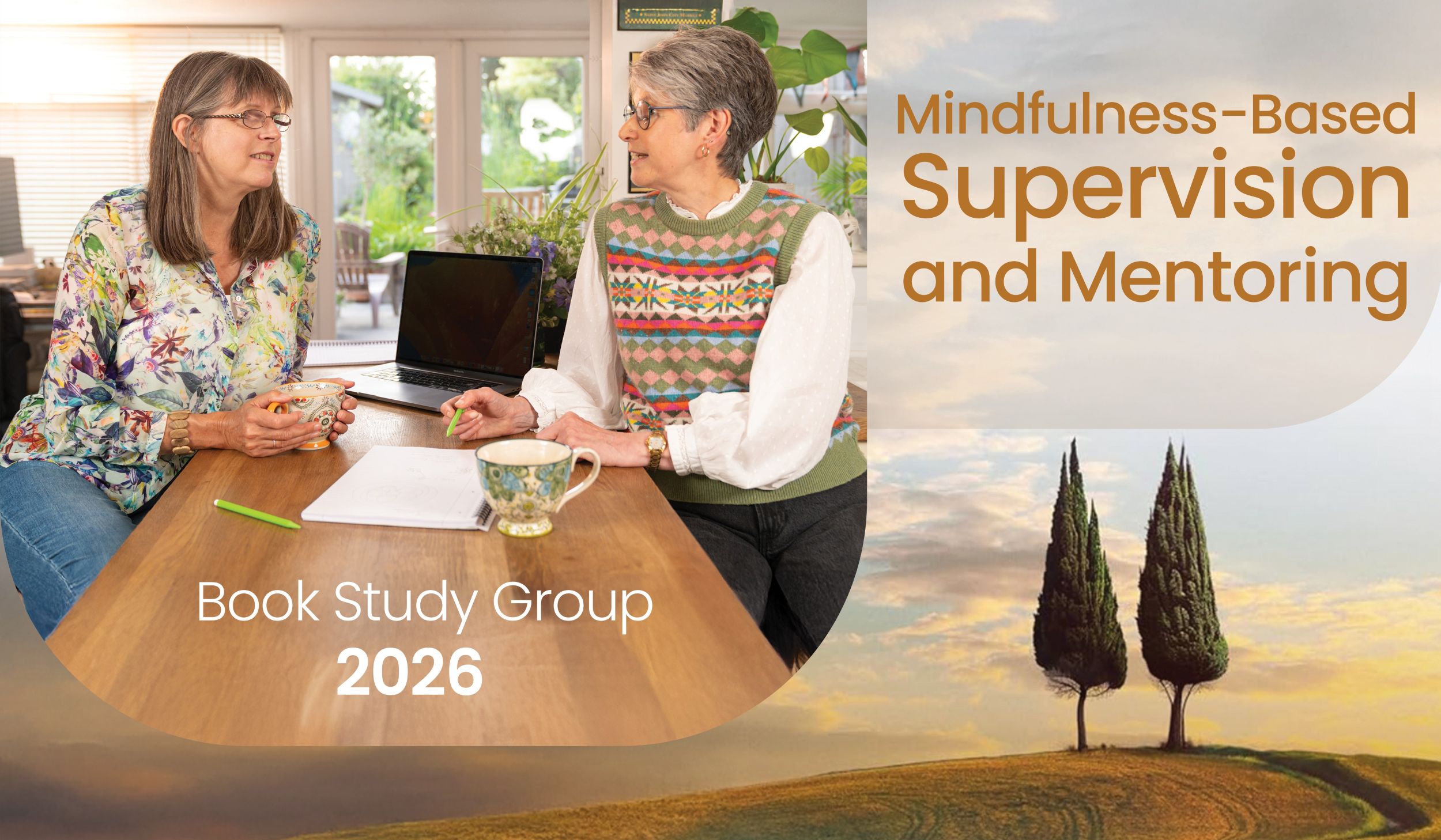
This forms the third of our four-part blog series, following the book study group on Mindfulness-Based Supervision and Mentoring: Using an Embodied Dialogue to Support Learning and Reflection. As authors and supervisors, we, too, are reading and reflecting, using the book as a vehicle for further reflection and exploration.
We are seeing that this process of reflecting alone and then in community both brings the material from the book to life as well as supporting new insights and learning – mirroring a similar process within supervision.
Our pre-reading and reflections were focused on the weft components of the mindfulness-based supervision (MBS) framework: the Petals, and the Belt. We also explored Part 3 of the book: Using the Mindfulness-Based Supervision Framework with Culture in Mind. In our dialogue together, we noticed the following:
The Petals
The Petals are the topics and themes that come into supervision. As we reflected on our own supervision over the last year or so we could see that we both took all of the different Petals over that extended period of time. However, when we pondered further, we could see something for all of the Petals that we could take that haven’t yet or not for some time.
We got curious about why not – often just slipping into habit and familiarity. Also, not taking the time like this to reflect in a more overarching way about supervision and what we need from it/could benefit from. We were struck by how using the Petals as a framework for reflecting on/reviewing supervision provided a useful structure and potentially brings some freshness into our preparation for each supervision session.
The Belt
Along with the group, we reflected on the specific question: If your supervisee offers mindfulness-based work in innovative ways, what do you draw upon for guidance around good practice? Although we had reflected individually, our list was very similar. It included more formal good practice guidance frameworks from BAMBA, the MBI:TAC, frameworks around safety, through to research, researched curricula and programmes, their background and experience of the community/population they are working with, etc. The other important aspect was the relational conversation through supervision. This allowed for shared discovery and ensuring that sound understanding and safety are paramount in innovation.
Keeping Culture in Mind
This is a massive topic. It is often accompanied by tenderness and intimacy. We chose to explore together how our upbringings have shaped aspects of our mindfulness-based work and the strength they bring to it. For example, the mentors who have inspired us to support others through relational support, our wish to have time to reflect and become acquainted with our inner world, and the conscientiousness we bring to our work as supervisors.
Through this exploration of the weft threads, we are reminded how supervision can be flexible and varied while maintaining the mindfulness-based warp threads as explored in our previous blog.
To see how our vision unfolds and keep in touch with our work around mindfulness-based supervision/mentoring:
Sign up for the latest news: https://www.vividmindfulness.co.uk/ scroll to the orange section and enter your email
Check out our websites/make contact: https://www.vividmindfulness.co.uk/; https://www.pameladuckerin.com/
Read the book: Mindfulness-Based Supervision and Mentoring: Using an Embodied Dialogue to Support Learning and Reflection